AI Stocks Still Show Real Revenue, but the CapEx Bar Has Risen
NVIDIA, Microsoft, and Alphabet disclosures, read side by side: which 2026 AI revenue is verified, and what the rising infrastructure bill actually costs.
AI infrastructure
A cluster for reading AI infrastructure spending through cash flow, cloud margins, chip demand, and data-center timing.
Reading lens
The AI trade is strongest when capex is paired with visible revenue, margin, utilization, and cash-flow evidence.
How to use it
Use this hub to compare the capex burden across hyperscalers, chip suppliers, and memory-cycle names before treating AI demand as one generic theme.
After reading the evidence cluster, use these tools to translate the theme into account-level assumptions.
Reading Order
These posts are ordered so the hub question can be followed through filings, official data, and company evidence.

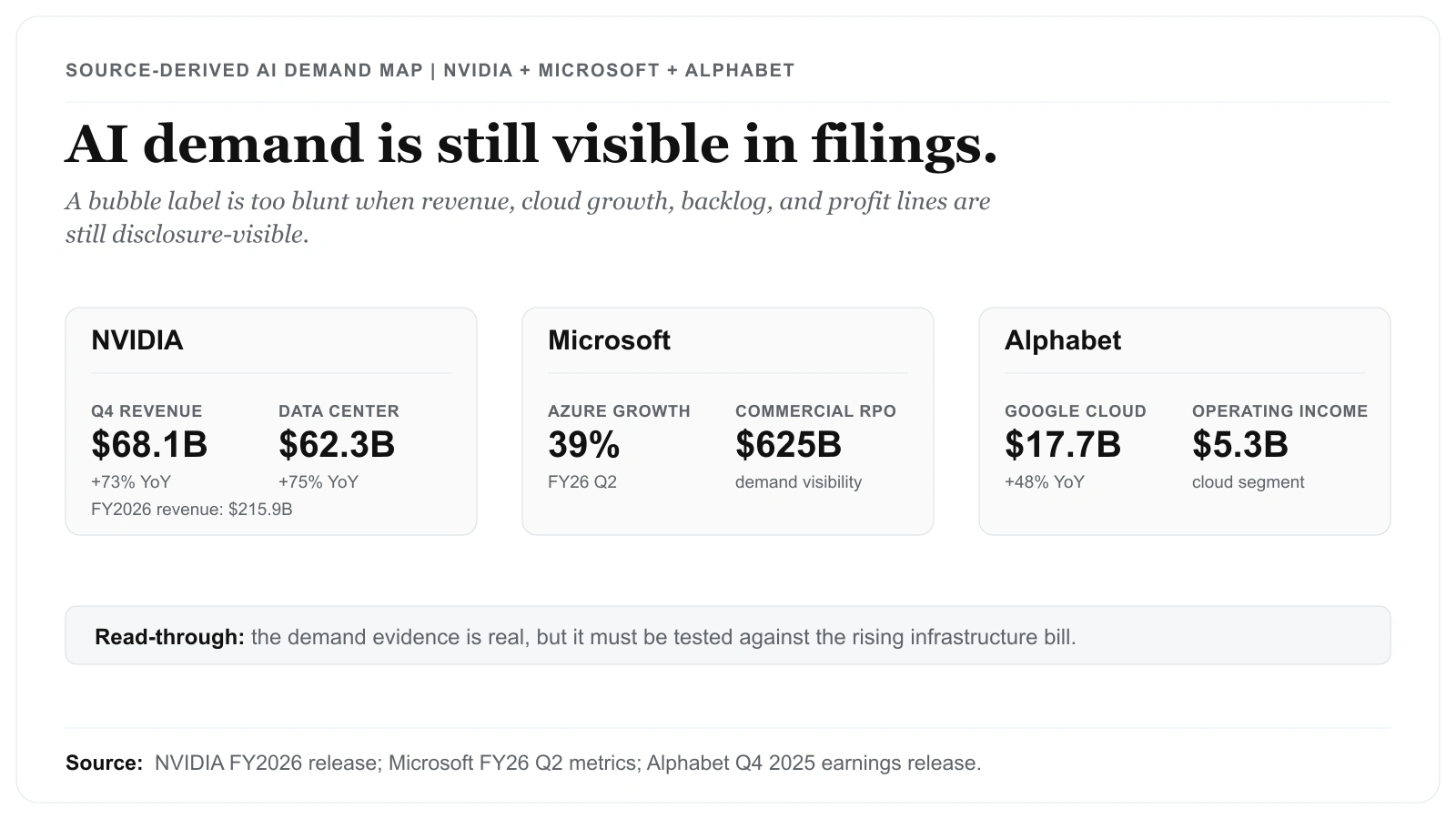
NVIDIA, Microsoft, and Alphabet disclosures, read side by side: which 2026 AI revenue is verified, and what the rising infrastructure bill actually costs.
NVIDIA's FY2026 filings show $102.7 billion of operating cash flow, $62.6 billion of liquidity, and $40.4 billion of buybacks. The 2026 issue is whether that cash engine can defend an AI premium that already assumes durable leadership.
Azure demand and commercial RPO against cash-funded AI capex: how Microsoft's 2026 cloud margin and Intelligent Cloud profit actually balance out.

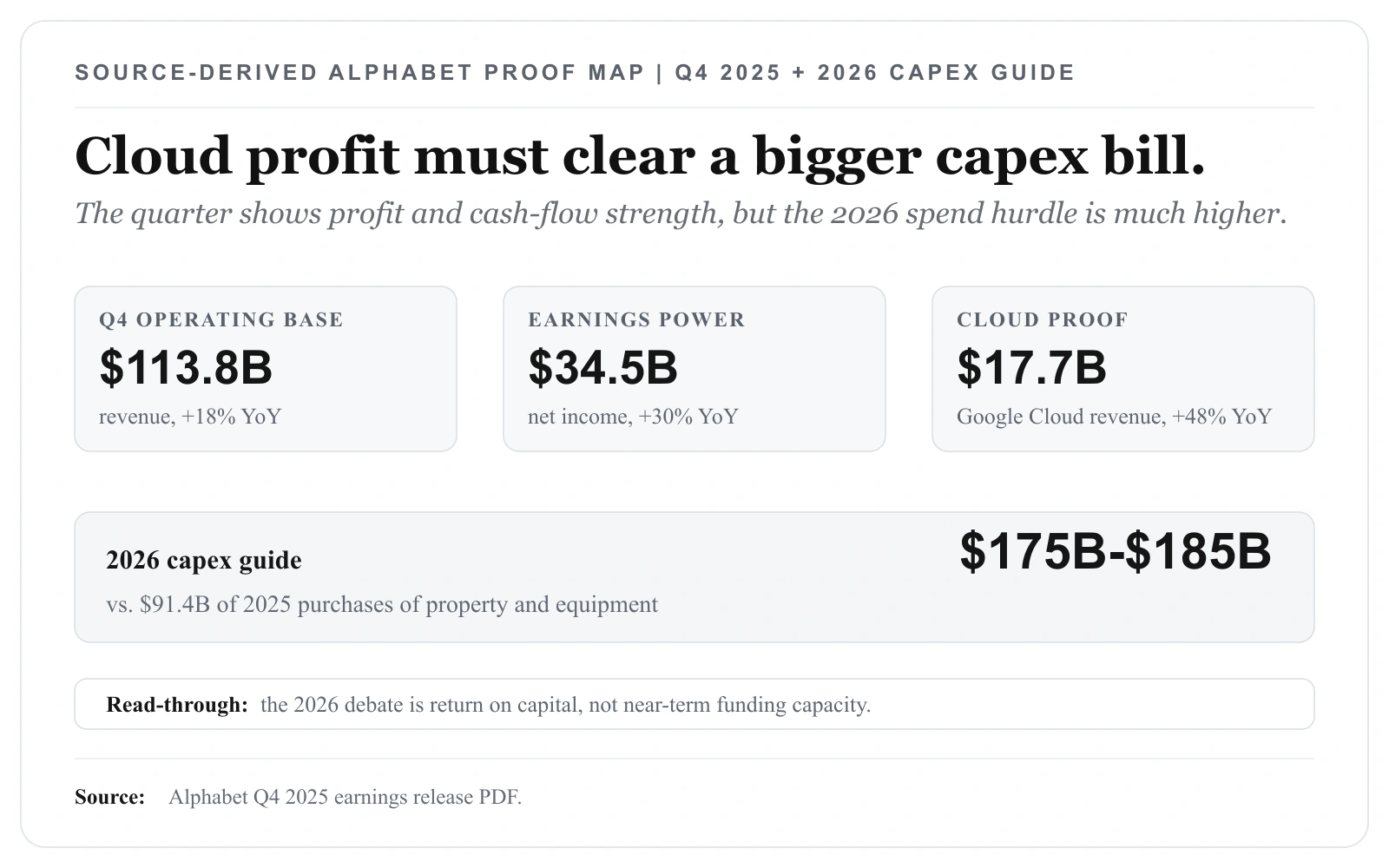
Alphabet's Q4 2025 release showed 48% Google Cloud revenue growth, $5.3 billion of Cloud operating income, and 2026 capex guidance of $175-$185 billion. The 2026 question is whether Search cash flow and Cloud profit stay visible as AI infrastructure spending rises.

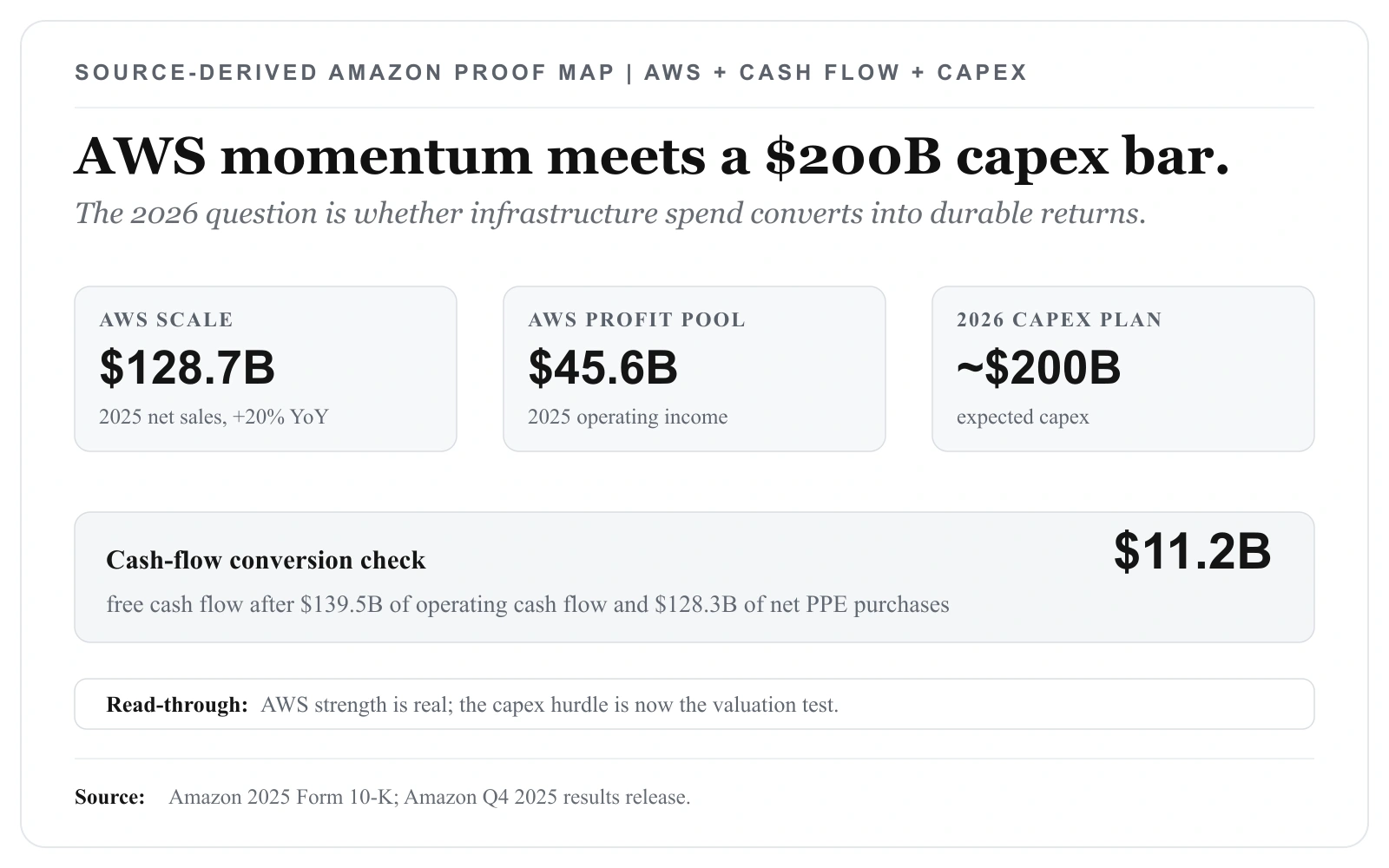
Amazon's 2025 Form 10-K and Q4 release show AWS reaccelerating, AWS operating income of $45.6 billion, operating cash flow of $139.5 billion, and a 2026 capex plan near $200 billion. The AMZN debate is whether the AI infrastructure bill earns visible returns.

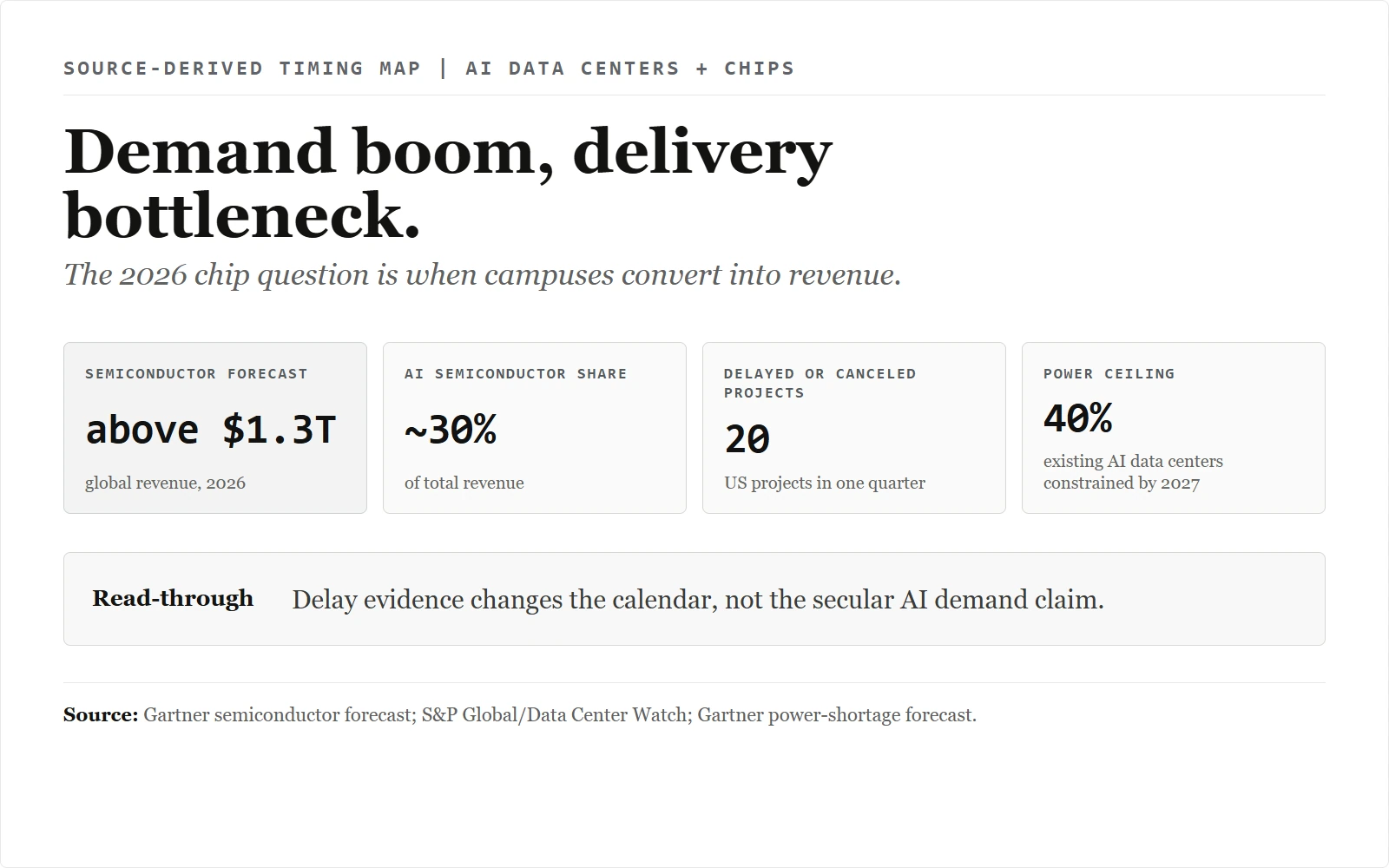
Project delays and power limits aren't the same as collapsing chip demand. A 2026 look at AI data-center supply, hyperscaler backlog, and what the evidence supports.
Intel's product segments still earn while the foundry bleeds. A 2026 read on segment profit, cash-flow coverage, and the PC cycle behind the market-cap pressure.
Sandisk's FY2026 Q3 margin reset met a post-print selloff and heavy short interest. The Q4 durability test that decides whether the SNDK cycle holds.
Your privacy choices
We use cookies to keep the site running, measure how readers use it, and — only with your permission — to show personalised advertising. You can decline non-essential cookies and change your choices at any time from our Privacy Policy.